A cap head screw sounds simple until the drawing reaches three different suppliers and each reads a different part. One interprets it as a socket head cap screw. Another assumes a generic cap screw. A third quotes a product family that fits the thread but not the head height or wrenching method. The result is not a vocabulary problem alone. It is a fit, tooling, and inspection problem created by a loose callout.
This guide explains how to interpret a cap head screw request, identify the intended geometry, and lock down the details before turning the phrase into an RFQ.
What a cap head screw request usually means
In engineering and sourcing usage, cap head screw often refers to a socket head cap screw or another cap-screw family with a cylindrical head. The phrase is still imprecise, so buyers should confirm the intended head geometry, drive, and dimensional standard before the RFQ is released.
For sourcing work, this ambiguity is a warning not to copy the search phrase directly into the drawing without interpretation. If the design really needs a socket head cap screw, call it that. If it needs a different cap-screw family, the RFQ should remove the ambiguity early rather than expecting the quote round to fix it.
Why the label mismatch causes real production problems
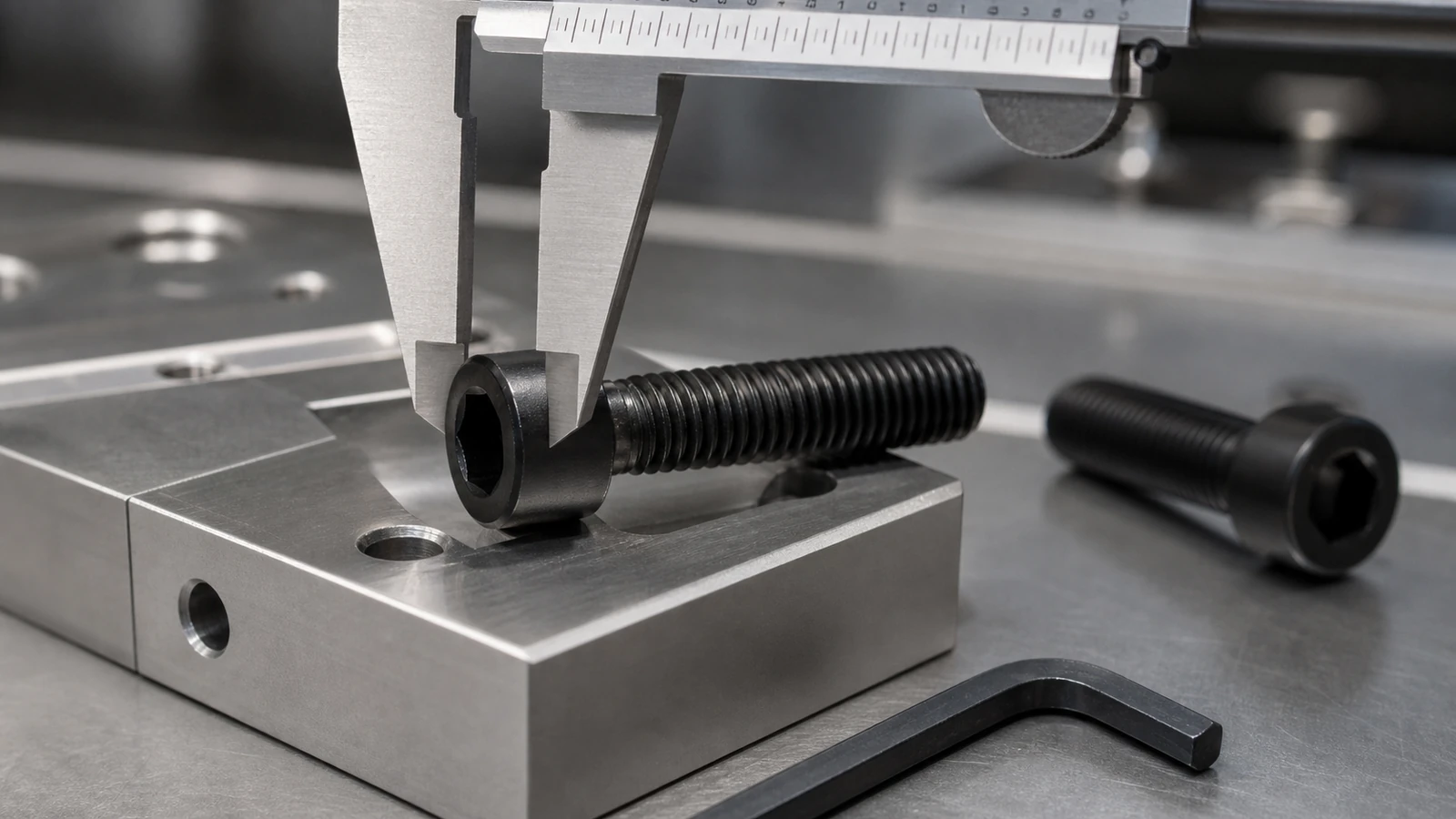
A cap head screw callout can fail in several ways. The head may be too tall for the counterbore. The wrenching method may not fit the tool path. The shank or thread length may be right, but the head diameter may interfere with the surrounding geometry. In precision assemblies, that is enough to turn a nominally correct fastener into a late-stage redesign item.
This is especially common when teams reuse older drawings or distributor terminology. The phrase cap screw may be perfectly normal inside one organization while a supplier expects the more specific socket head cap screw callout tied to a formal dimensional standard. If the language does not match the geometry, the inspection plan becomes unreliable too.
Clarify the geometry before you discuss coating or price
The first task is to lock down the fastener family and the geometry that matters around it. If the joint needs a cylindrical head with an internal hex drive, say so explicitly. If the design is sensitive to head height, under-head fillet, counterbore diameter, or wrench clearance, put those checks into the drawing review instead of assuming the supplier’s default interpretation is acceptable.
- Confirm whether the intended part is a socket head cap screw, not just a generic cap screw label.
- Review head diameter and head height against the actual boss, recess, or counterbore.
- Check drive size and tool access before finalizing material or finish options.
- Separate overall length from under-head length when the callout or quote format can vary.
Material and finish choices still change the usable design window
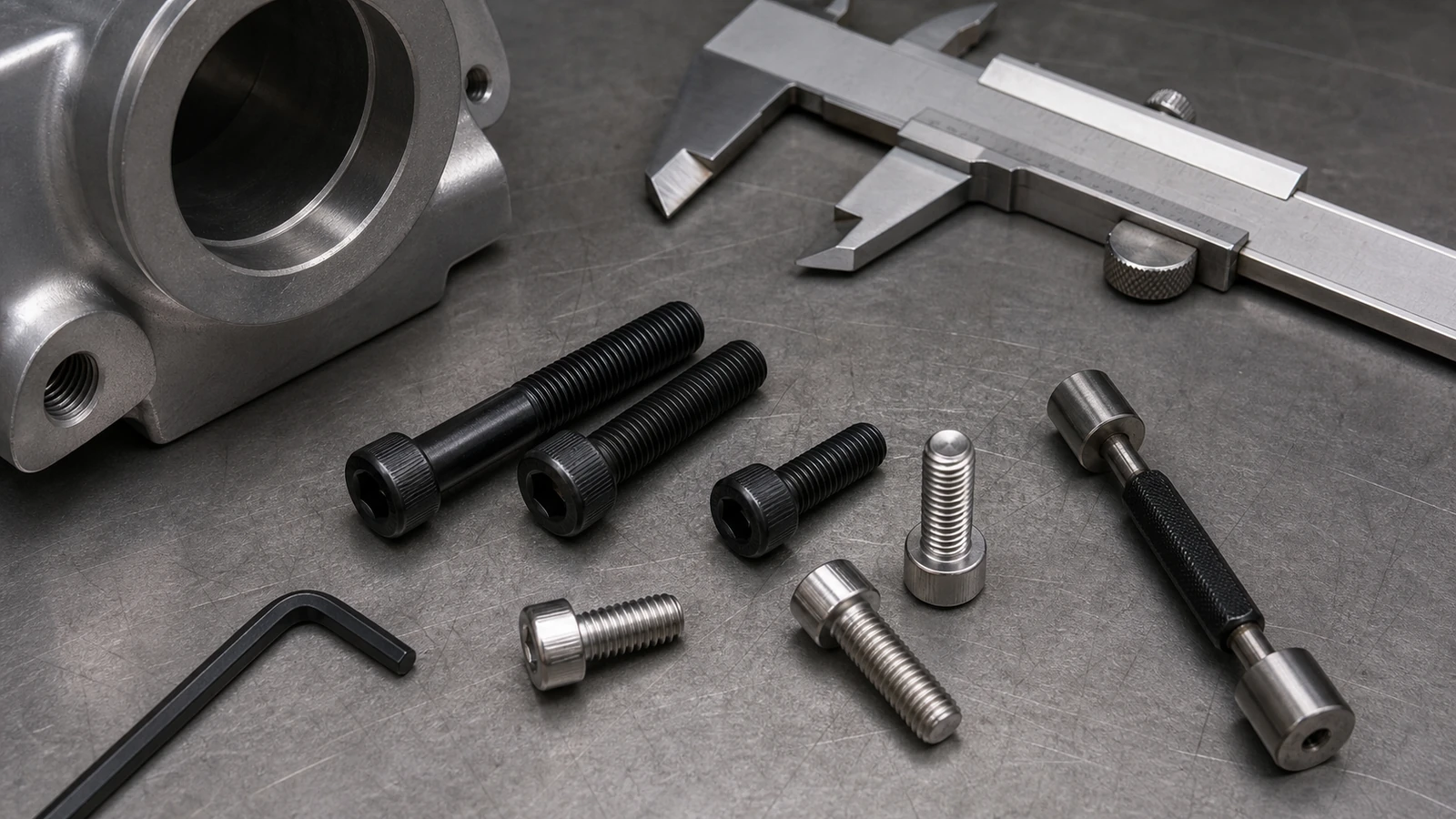
Once the geometry is correct, material and finish decisions can be evaluated against clamp load, corrosion exposure, service removal, and cosmetic requirements. Stainless options may help with corrosion resistance. Alloy steel may be preferred when strength and tool engagement are the priority. Black oxide may suit indoor assemblies but not exposed environments. The point is not that one option is better in general. The point is that the geometry must be right first, then the finish must match the real environment.
This is where buyers often oversimplify. A distributor category page can make the family look interchangeable because dozens of sizes share the same product grid. In production, the correct callout depends on mating material, access angle, service cycles, and whether the visible face can tolerate witness marks or finish variation.
What to write into a cap-head-screw RFQ
A useful RFQ should let the supplier confirm the family, dimensions, and inspection expectations without guessing from shorthand. When the request only says cap head screw plus thread size, the quote will almost always depend on assumptions that should have been made visible.
- Name the intended family explicitly, such as socket head cap screw, when that is the design intent.
- State thread, under-head length, head constraints, drive style, and any counterbore or clearance limitations.
- Specify material and finish with the service environment in mind, not just a default distributor listing.
- Include drawing references, tolerance concerns, and whether a sample must be checked against mating parts.
- Define acceptance points for head damage, wrench fit, cosmetic surfaces, and repeat installation risk.
If the drawing packet still needs cleanup, the RFQ checklist, the machine screws page, and the custom screw catalog are the best XiYu pages to align fastener-family language before the quote round begins.
Common mistakes when buyers use cap head screw as a shortcut
The biggest mistake is assuming every supplier reads the same shortcut the same way. Another is focusing on thread and length while leaving the head geometry vague. In compact assemblies, the head is often what breaks the fit, not the thread. Buyers also lose time when finish choices are discussed before the team has confirmed that the correct head family is even on the table.
- Using cap head screw as a shorthand when the drawing really needs socket head cap screw.
- Ignoring head diameter, head height, and drive access because the thread callout looked complete.
- Treating distributor category names as engineering definitions.
- Approving samples without checking actual mating-part fit and tool engagement.
Frequently asked questions
Is a cap head screw the same as a socket head cap screw?
Not always. In common usage, the phrase often refers to a socket head cap screw, but it can still describe other cap-screw families. Buyers should name the intended family explicitly when the cylindrical internal-hex design is required.
What is the most important check before quoting a cap head screw?
Head geometry and tool access are usually the first checks because the thread can be correct while the head still fails the assembly. Counterbore fit, head diameter, and drive size should be confirmed early.
Why do supplier quotes differ on the same cap screw request?
Quotes differ when the request relies on shorthand and leaves the fastener family open to interpretation. Suppliers may assume different head styles, finish options, or dimensional standards unless the RFQ removes that ambiguity.
Should finish be selected before the head family is confirmed?
No. Finish matters, but it should be reviewed after the correct geometry and drive style are fixed. Otherwise the team may compare prices for parts that do not solve the actual assembly requirement.
Treat cap head screw as an interpretation task before it becomes a sourcing task
Cap head screw can be a useful search phrase, but it is too loose for final RFQ language unless the geometry is already obvious to every party involved. Translate the phrase into the exact family, dimension, and inspection requirements first. That is how a cap head screw request turns into a dependable quote instead of a preventable clarification loop.