Structural bolts are often treated as a heavier version of an ordinary hex bolt, and that shortcut is where expensive mistakes start. A joint can look routine in the model while still depending on the wrong head geometry, the wrong nut-and-washer set, or the wrong installation method once the field crew touches it. When a drawing calls for structural bolts, the question is not only what size to buy. It is what kind of bolted joint the project is actually asking you to control.
This guide turns recurring structural-bolt procurement questions into RFQ and drawing-review checks for industrial sourcing teams.
What makes a structural bolt different from a standard hex bolt
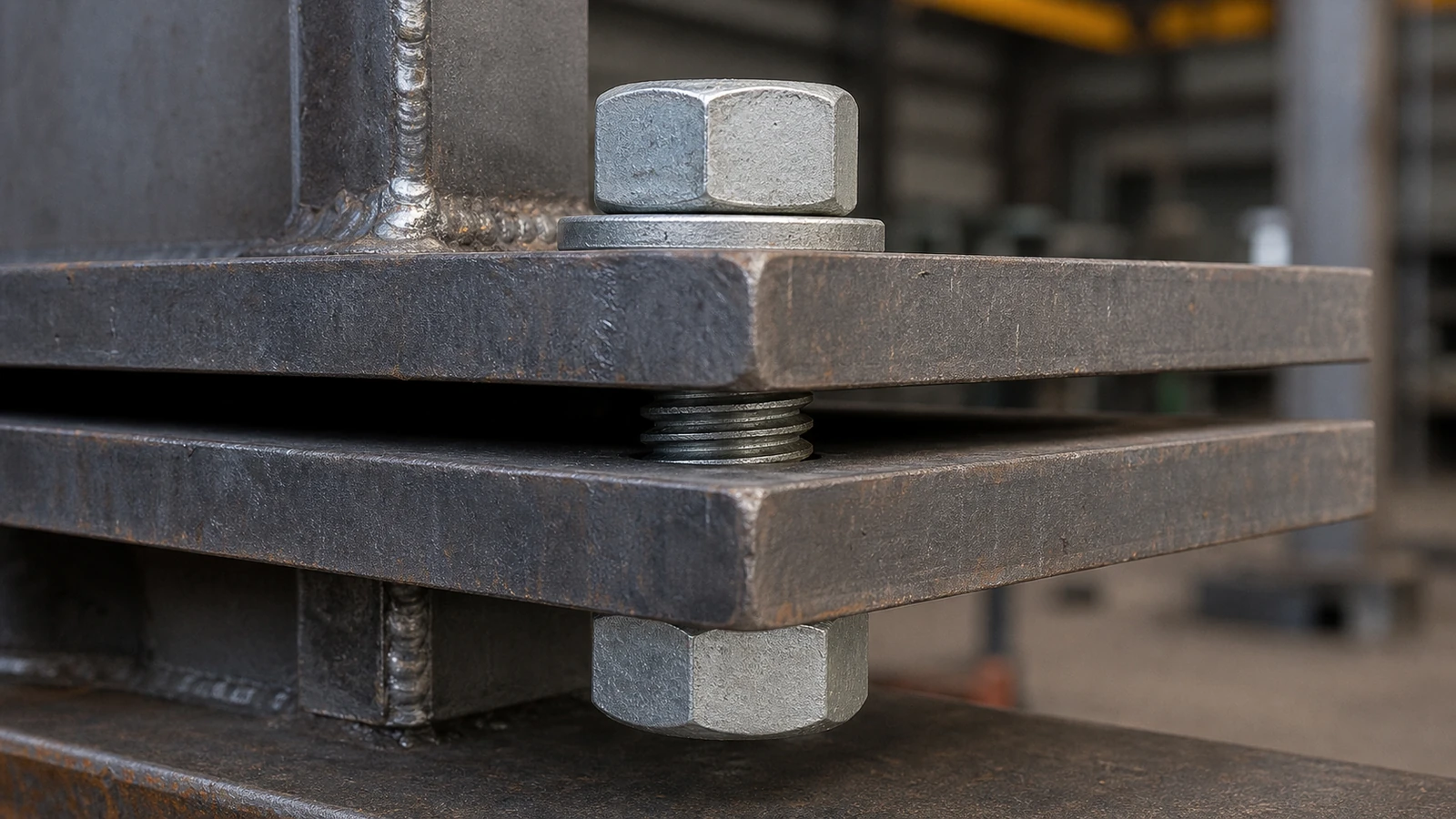
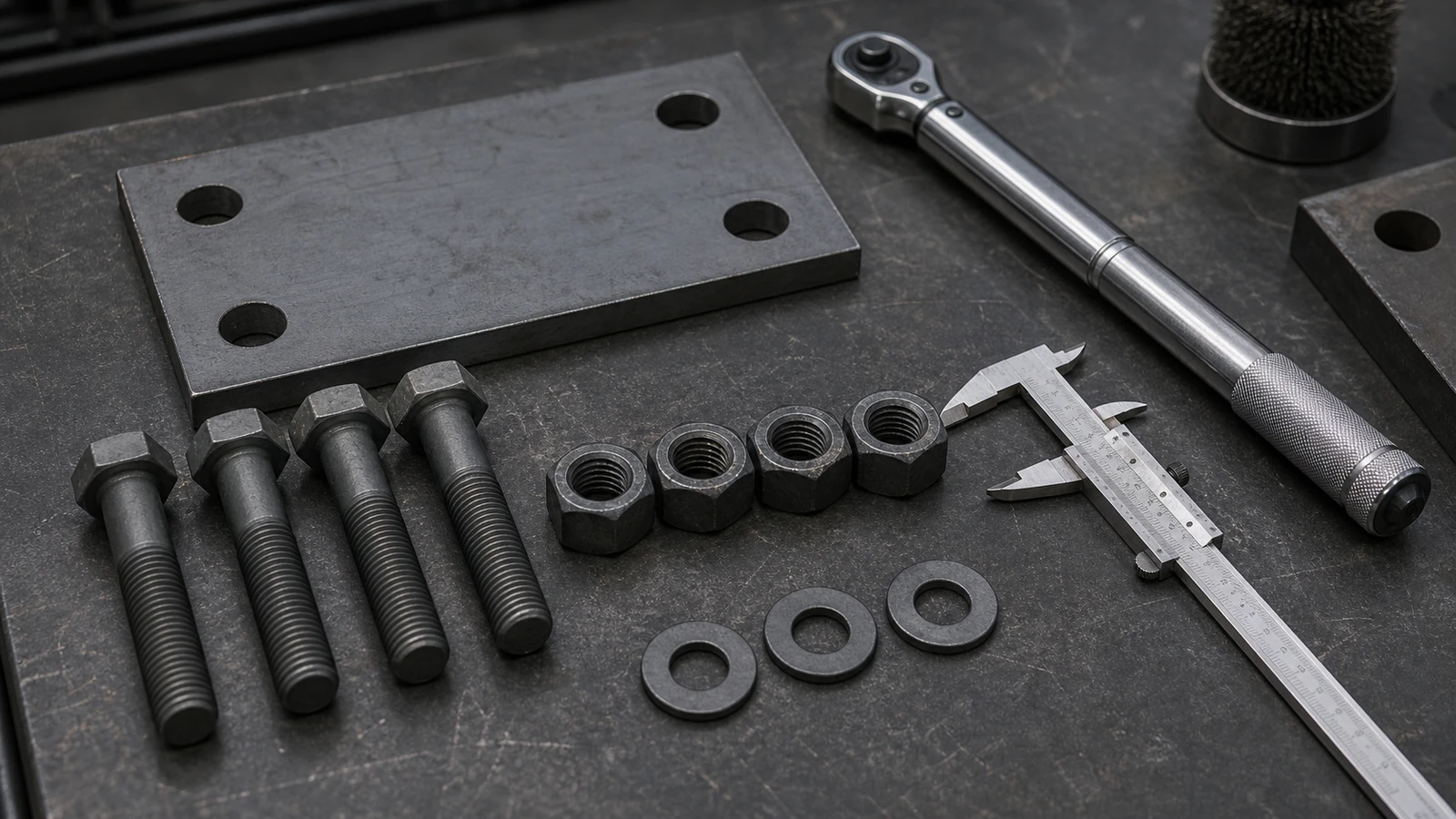
The essential distinction is that structural bolts are specified as part of a structural fastening system, not just by diameter and length. The head geometry, shorter thread length, matched heavy hex nuts, hardened washers, and installation method all matter to the joint’s intended performance. The RFQ should identify the joint condition, bolt diameter and length, coating limits, matched hardware, and any installation procedure instead of treating the bolt as an isolated line item.
That is why structural bolts should not be treated as ordinary hardware-store hex bolts with a stronger material label. Once the drawing enters a structural-bolt system, the specification family and the installation method become part of the product definition. Buyers who miss that boundary often create substitution problems before fabrication even begins.
Specification family matters more than a casual grade comparison
ASTM A325 and A490 are frequently compared because buyers need to separate structural-bolt families and their intended applications. Many teams start with grade language because it sounds familiar, but grade alone is not enough. The governing specification family, finish, and mating hardware need to stay consistent with the intended structural joint. That is also why structural-bolt pages often compare these fasteners to mechanical bolts instead of only posting strength tables.
For XiYu-style RFQ review, the key lesson is simple: do not reuse a grade chart or an old hex-bolt note as a substitute for a structural-bolt callout. If the drawing expects a structural system, state the exact fastener family the supplier is being asked to quote, along with any matched nut and washer requirements.
Matched hardware and installation method belong in the decision
A structural-bolt decision rarely ends with the bolt itself. Matched hardware and tensioning method must be evaluated together because pretension, washer hardness, coating compatibility, and installation procedure can all change whether a field joint is acceptable. A standard bolt paired with the wrong nut or washer is not saved by correct thread size alone.
This is where project teams often separate purchasing from installation too aggressively. If the RFQ ignores whether the field method expects snug-tight installation, pretensioning, or a tension-control system, the quote may look complete while the joint definition is still incomplete.
- Confirm whether the joint requires a structural-bolt system or a standard hex-bolt arrangement.
- Keep the specification family, finish, and matched nut/washer requirements aligned.
- Record whether the installation method depends on pretension or tension-control hardware.
- Check coating compatibility before mixing galvanized and non-galvanized hardware in one assumption set.
What to review before releasing a structural-bolt RFQ
A useful RFQ for structural bolts should tell the supplier what joint standard is being supported, how the hardware is expected to be installed, and what substitutions are off limits. Without that context, the quote can drift toward product availability instead of joint intent.
- State the governing structural-bolt specification family and any required matching nut and washer system.
- Describe the finish and whether the joint environment requires galvanizing or another corrosion-control approach.
- Note the installation method, especially when pretension or tension-control hardware is part of the design.
- Call out any dimensional or replacement restrictions that prevent substitution with ordinary hex-bolt hardware.
- Include drawing, inspection, and sample-review expectations if the project uses non-routine assemblies or mixed finishes.
If the engineering package still needs alignment, the custom screw RFQ checklist, the custom screw catalog, and the factory capabilities page can help structure the fastener review before the drawing is released for quote.
Common substitution mistakes with structural bolts
The most common error is using grade language as if it captures the entire joint requirement. Another is assuming any heavy-looking hex bolt can replace a structural fastener if the nominal strength seems close. Teams also lose time when they quote the bolt without locking the nut, washer, and installation method that make the system coherent.
- Substituting ordinary hex hardware because the thread and diameter look similar.
- Copying a grade note without confirming the structural-bolt specification family behind it.
- Ignoring matched nuts and washers during the first quote round.
- Leaving installation method undefined even though the joint depends on field tensioning practice.
Frequently asked questions
Are structural bolts just stronger hex bolts?
No. Structural bolts belong to a defined structural fastening system that includes head geometry, thread profile, matched hardware, and installation expectations. Strength is part of the picture, but it is not the whole definition.
Why do structural-bolt pages compare A325 and A490 so often?
Because buyers often need help separating different structural-bolt families and their applications. This comparison becomes important when teams move from standard fasteners into structural joints.
Can a grade chart replace a structural-bolt specification?
No. A grade chart may help with orientation, but it does not replace the full structural-bolt system definition. The governing specification family, matched hardware, finish, and installation method still need to be called out.
What should be clarified before the RFQ is sent?
Clarify the exact structural-bolt family, nut and washer requirements, finish, and installation method. Those details prevent the supplier from quoting a product that matches the thread but not the joint intent.
Structural bolts should be quoted as a joint system, not just a bolt line item
Structural bolts become risky when buyers reduce them to size and grade shorthand. The safer path is to quote the joint system: the structural-bolt family, matched hardware, finish, and installation method together. That is how structural bolts stay tied to the design intent instead of drifting into a loose substitute category.