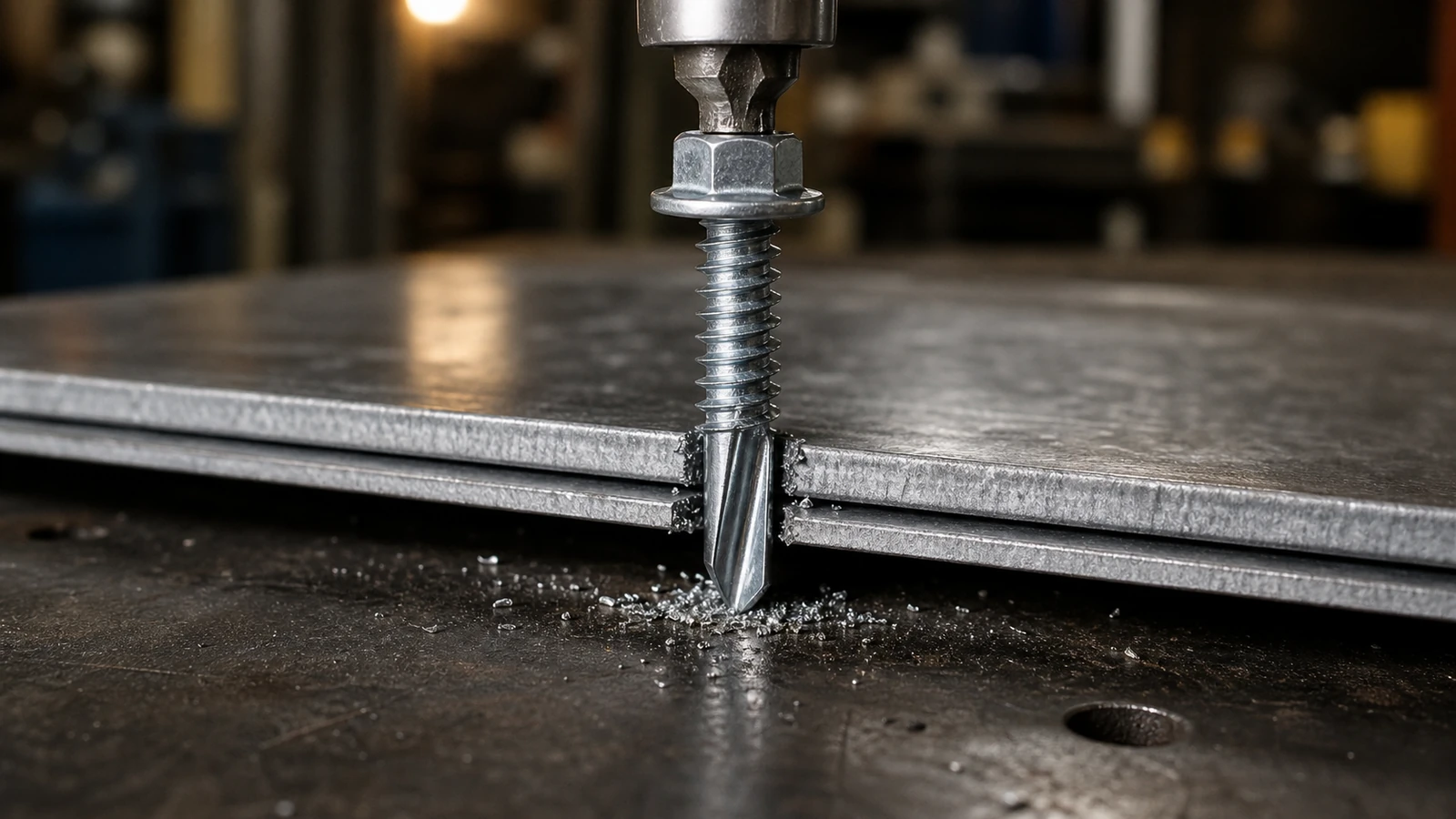
A buyer searching for tek screws for metal usually does not have a screw problem first. They have an installation-risk problem. The screw stalls in the steel, the point burns before it drills through, the washer head rocks on the surface, or the line discovers too late that the coating choice solved corrosion but hurt drilling consistency. TEK screws for metal work well only when the point, head, finish, and test conditions are matched to the actual joint.
This guide explains how to review TEK screws for metal from an OEM sourcing perspective and which RFQ details matter before sampling or release.
Why the term TEK screws for metal is only a starting point
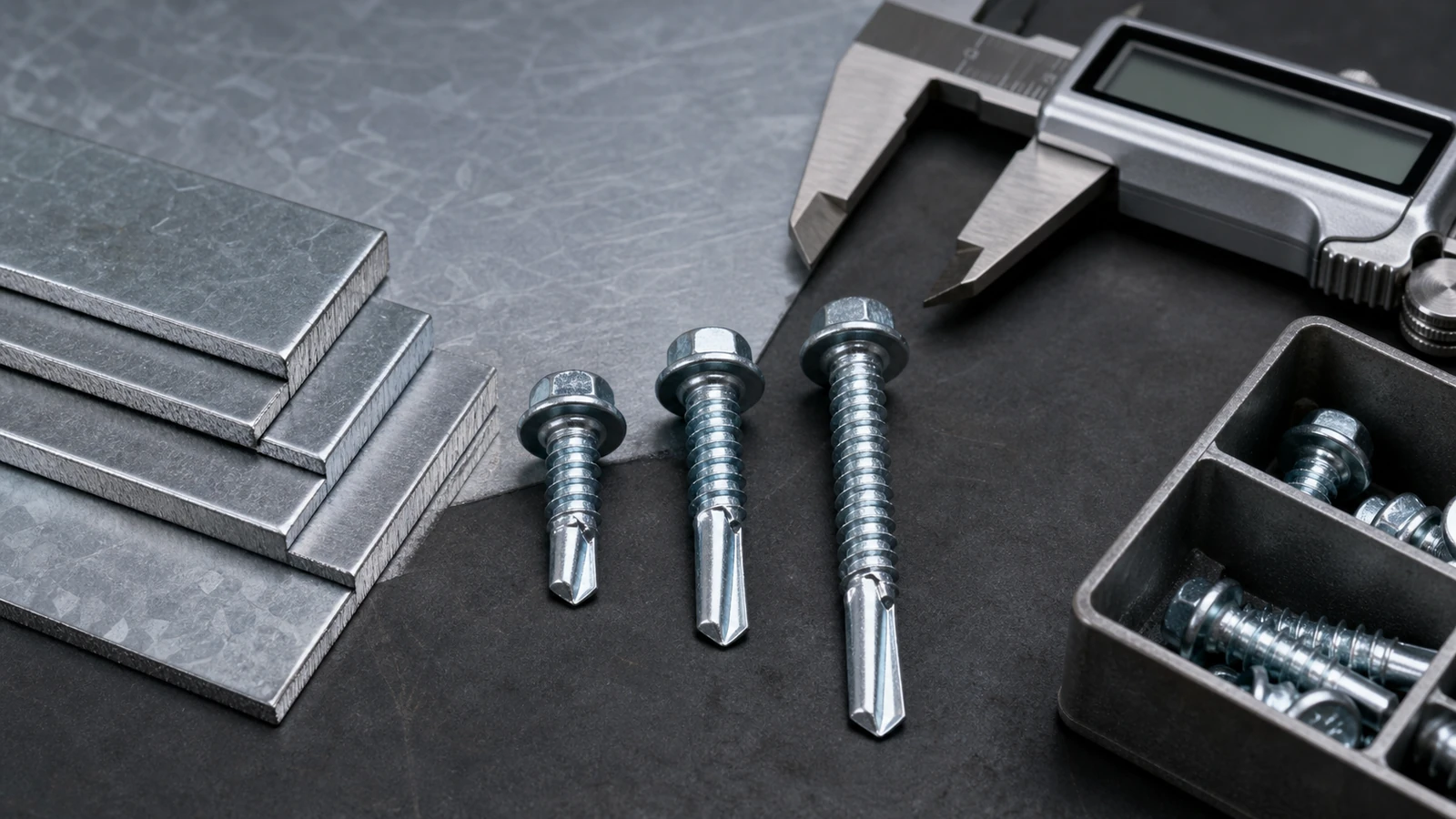
For TEK screws for metal, the recurring engineering issue is whether the point style matches the real steel thickness. The decision is not just about finding a brand or a hardware-store pack. It is about selecting a self-drilling fastener system that can cut, seat, and hold in the actual metal stack.
In practice, buyers often use TEK as a generic shortcut for self-drilling screws. That shortcut is fine at the search box stage, but it is not precise enough for RFQ work. The screw family, drill-point designation, head style, washer requirement, coating, and tool setup all affect whether the same nominal diameter will behave well on the line.
Start with point designation and steel thickness
For tek screws for metal, the first real filter is not length or thread size by itself. It is the drill-point geometry and the tested thickness window behind that point. Thin-gauge sheet and heavy-gauge steel do not give the screw the same job. A point that works well in one metal stack may overheat, wander, or fail in another.
That is why a useful RFQ states the full steel stack instead of saying only “metal to metal.” Include thickness of the top sheet, thickness and hardness of the support member, and whether paint, plating, sealant, insulation, or air gaps affect the drilling path. If the point selection is wrong, later changes to coating or drive will not rescue the sample.
- State the actual steel stack, not just the nominal screw diameter.
- Ask whether the published drill range belongs to the exact point family being quoted.
- Separate steel-to-steel jobs from metal-to-wood or panel-to-support jobs.
- Treat catalog point numbers from different brands as similar only after the underlying capacity is verified.
Head style and washer details control installation stability
Point size alone does not settle installation stability. A hex washer head is common because it spreads load and helps the driver stay engaged while the point is working. Low-profile or pan-style heads can make more sense when clearance is tight. Bonded washers matter when the assembly also has to seal. If the driver slips or the head marks the finish, the issue is not solved by buying a stronger drill point.
From a sourcing perspective, this is where finished-face requirements should be documented. If the visible side cannot show washer witness marks, if paint damage is unacceptable, or if a wide sealing washer is mandatory, the RFQ needs that information before the supplier chooses a default head style. The same screw family can feel reliable or risky depending on how the head seats under real tool pressure.
Coating and material decisions should not be copied from a catalog thumbnail
Tek screws for metal are often bought under time pressure, so teams default to a familiar zinc or painted option without revisiting the environment. That is risky. The drilling task, corrosion exposure, cosmetic expectation, and replacement cycle all affect the right finish. A finish that looks acceptable indoors may not hold up on an outdoor bracket. A corrosion-resistant option that sounds safer may still need confirmation on drilling behavior and mating-metal compatibility.
Buyers are balancing two decisions at once: can the screw drill the joint, and will it survive the service environment? Put both into the RFQ. Describe whether the joint is exterior or interior, whether salt or washdown is involved, and whether the fastener is exposed after installation.
What to include in a TEK-screw RFQ
A productive RFQ for tek screws for metal should let the supplier evaluate the drilling job, the seating condition, and the inspection criteria in one read. If the request only names diameter and length, the answer will default toward a catalog nearest match instead of the real installation problem.
- List the measured steel stack, coating layers, and support condition.
- Specify the drill-point family or ask the supplier to recommend one against the documented stack.
- Call out head style, washer need, drive style, and any cosmetic limits on the visible face.
- Describe the environment, approved coating systems, and whether post-install sealing or repainting is planned.
- Define trial acceptance criteria such as drilling completion, seating quality, burr tolerance, and stripped-drive rejection.
If your drawing package is still incomplete, the custom screw RFQ checklist, the self-drilling screw page, and the custom screw catalog are the most relevant XiYu references to align sample expectations before release.
Common buyer mistakes with tek screws for metal
The most common mistake is approving the screw because it eventually penetrated one test coupon. A slow, overheated, or unstable sample can still look like success while hiding the exact failure mode that later stops the line. Another mistake is assuming the same screw will behave the same once coating thickness, tool angle, operator technique, or support hardness changes.
- Choosing by brand familiarity without documenting the steel stack.
- Assuming the same TEK label means the same drill capacity across suppliers.
- Skipping head-style or washer requirements because the focus stayed only on penetration.
- Approving a sample without defining burr limits, tool stability, and finish damage acceptance.
Frequently asked questions
Are TEK screws and self-drilling screws the same thing?
TEK is commonly used as a shortcut for self-drilling screws, but the exact point family, head style, and finish still vary by product. Buyers should verify the documented drill capacity instead of treating every TEK-labeled screw as interchangeable.
What matters most when choosing tek screws for metal?
The real steel thickness stack is usually the first critical input because it determines which point geometry is even in the correct range. Head style, washer needs, and coating should be selected after that drilling requirement is clear.
Can one TEK screw cover every metal-to-metal job?
No. Metal stack, support hardness, coating, and seating condition all change the installation window. A screw that works on thin sheet may be the wrong choice for heavier steel or stricter cosmetic requirements.
What should a sample trial confirm before release?
The trial should confirm drilling completion, seating stability, burr behavior, finish damage limits, and whether the drive stays intact under the real tool setup. A pass should reflect production conditions, not only one easy coupon.
Use tek screws for metal as a drilling-job decision, not a catalog shortcut
Tek screws for metal can shorten assembly and remove pre-drilling steps, but only when the screw is selected around the actual joint. Start with steel thickness and point designation, then verify head style, finish, and trial criteria in the RFQ. That approach turns tek screws for metal from a generic search term into a controlled engineering decision.