A missing washer does not always show up in incoming inspection. It usually shows up on the line, when the operator has already picked a screw, found the mating hole, and then realizes the joint still needs a separate flat or lock washer. That extra handling step costs time, creates omission risk, and becomes worse on small screws or blind assembly points. A SEMS screw exists to remove that failure mode, but only when the washer stack and joint are specified with the same discipline as the screw itself.
This guide explains what a SEMS screw is, how captive washers are retained during manufacture, where the design helps, and which drawing details matter before you send a quantity request to a precision fastener supplier.
What a SEMS screw actually is
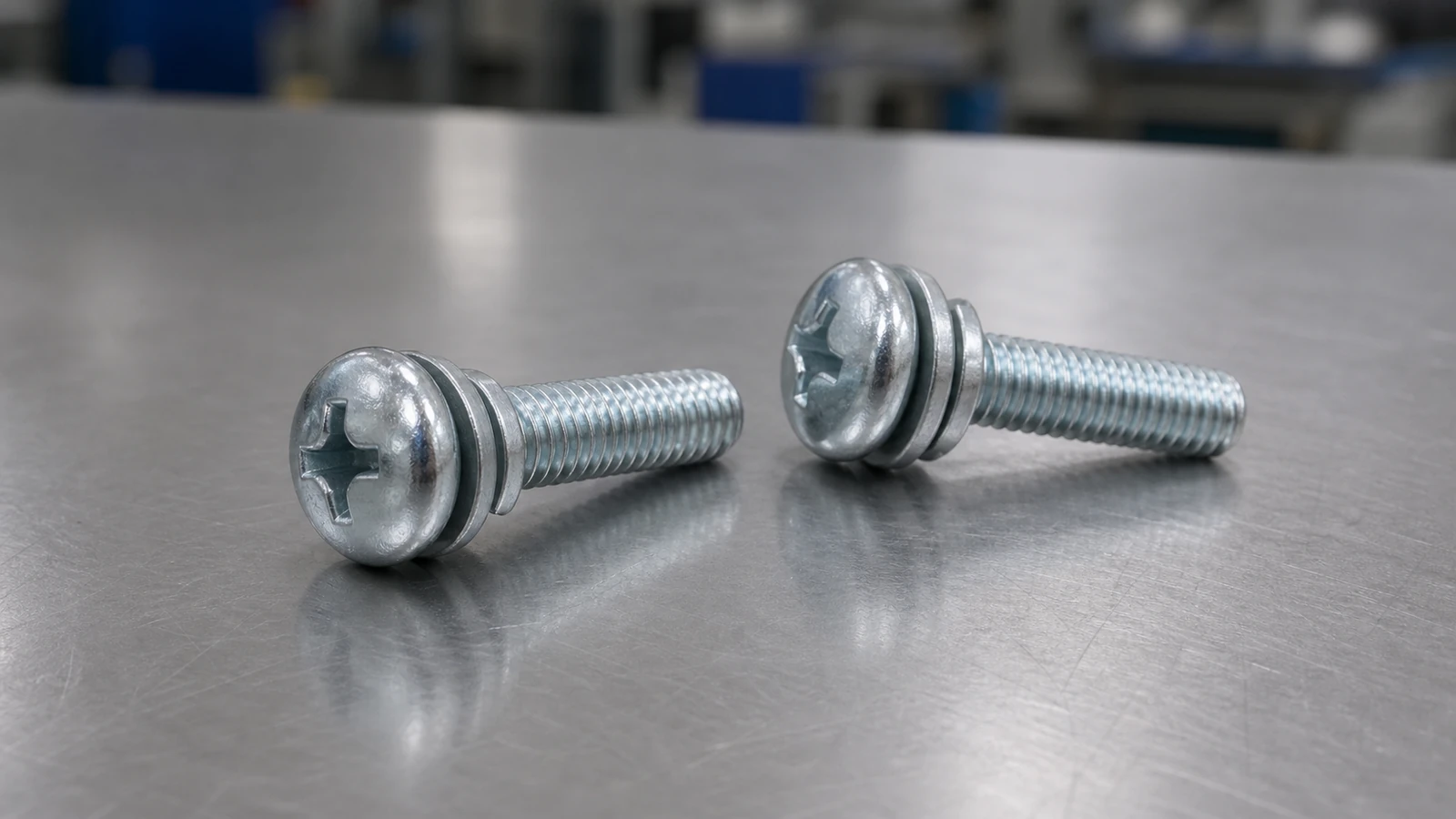
A SEMS screw is a pre-assembled screw-and-washer combination. The washer or washer stack is placed on the screw blank before thread rolling, so the finished major diameter becomes larger than the washer bore and keeps the washer captive. Sources such as NBK, J C Gupta, and DB Roberts all emphasize the same core idea: the washers remain free to rotate but are no longer separate loose components.
That definition matters because buyers often use SEMS to describe very different parts. One RFQ may mean a pan-head machine screw with a flat and split washer. Another may mean a flange-like captive serrated washer under a small electronic screw. The word alone does not define head style, washer type, drive, material, finish, thread, or assembly torque.
Where SEMS screws improve production flow
SEMS screws are most valuable when the assembly process is sensitive to part count, omission risk, and handling speed. If the operator would otherwise pick a screw, then a washer, then verify washer orientation, a captive assembly reduces touches and narrows the chance of a missed component. The benefit is strongest in compact products, field service kits, light automation, and any line where dropped washers can disappear into equipment or housings.
The design can also help procurement. A screw plus washer pair becomes one controlled part number, one receiving lot, one kitting item, and one installation instruction. That simplification is useful only if engineering already decided which washer function is needed. A SEMS screw does not automatically solve loosening, bearing pressure, paint damage, or grounding unless the washer style actually supports that job.
- Use SEMS when washer omission is a recurring assembly defect or service risk.
- Use it when screw size is small enough that loose washers are hard to orient or feed.
- Use it when the line benefits from one ready-to-install component rather than two or three part numbers.
- Do not choose SEMS only for convenience if the joint still needs a different underhead geometry, a larger washer OD, or a field-replaceable washer.
Washer stack selection changes joint behavior
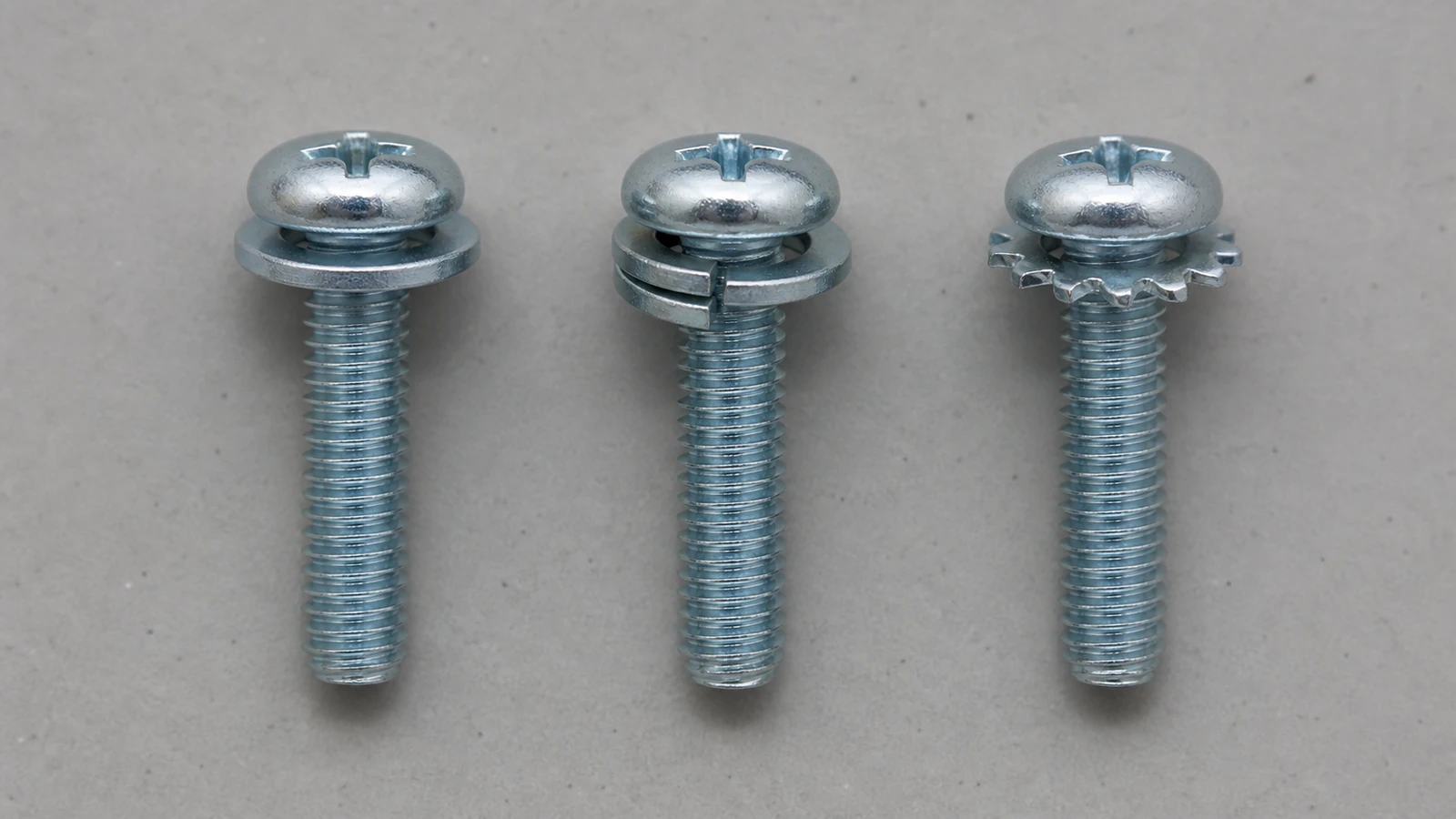
The washer stack is the real engineering choice. A flat washer helps distribute load and protect the mating surface. A split lock washer is intended to add spring action and some resistance to loosening, though its performance still depends on joint stiffness and clamp retention. Tooth washers increase bite into coatings or conductive surfaces but can mark the panel. Conical and special washers can alter deflection, friction control, or seating behavior. These choices should be made from the joint requirement, not from what happens to be easiest to source.
Double-washer SEMS combinations are common, but they also raise stack height under the head. That changes grip, exposed thread length, and sometimes driver access. If the screw seats into a boss with shallow engagement, the added washer stack can push the effective clamp plane upward and leave fewer threads engaged than the drawing assumed.
Manufacturing details that belong on the drawing
Because the washers are installed before thread rolling, SEMS manufacture is tied directly to thread geometry, washer bore, and head design. A small change in thread major diameter or washer ID can affect captive retention. Likewise, changing from a pan head to a low-profile head can reduce space for the drive recess, which then changes torque margin during installation.
Custom SEMS requests often need more review than buyers expect. The supplier has to confirm the washer materials, washer thicknesses, bore tolerances, screw blank geometry, thread rolling path, and any plating buildup that may affect free spin or washer seating. If the joint is cosmetic, the washer edges and underhead contact face need their own appearance criteria rather than being treated as invisible secondary details.
- Head style, drive type, and recess depth.
- Thread size, pitch, tolerance, and the definition of overall length.
- Washer type, washer quantity, washer material, OD, ID, and thickness.
- Required captive behavior: free-spinning, retained after plating, or limited axial float.
- Finish or coating on both the screw and washer stack, especially when friction consistency matters.
Common failure modes before the line ever reaches full volume
The first failure is assuming every washer stack behaves the same. A serrated washer may solve grounding but destroy a painted face. A broad flat washer may help a plastic cover but interfere with a nearby boss radius. A split washer can add height that the enclosure did not reserve. Another common failure is treating captive washers as if they guarantee torque consistency. They do not. Coating thickness, burrs, free-spin resistance, underhead friction, and seating flatness still change the torque-to-clamp relationship.
Feeding and service also deserve attention. A washer stack that is dimensionally acceptable on paper can still tilt in a bowl feeder, bridge in a chute, or snag at the entry of an automated driver nosepiece. Service technicians may also misread a SEMS part if the captive washer makes the screw appear longer or if the washer blocks access in a narrow tool channel.
What to ask for in a SEMS screw RFQ
A good RFQ explains the joint, not just the screw. If the supplier receives only a head diameter, thread size, and quantity, they still cannot judge whether the washer stack is protecting paint, managing clamp distribution, preserving conductivity, or resisting vibration. The more the washer function matters, the more the assembly context matters.
- Provide the full screw callout plus the washer stack details in one controlled drawing or table.
- Identify the mating materials, coating stack, and whether visible marking is acceptable under the washer.
- State the installation method: manual tool, power driver, or automated feeding and nosepiece constraints.
- Clarify whether torque, torque-angle, or seating inspection is the line control method.
- Send sample parts or photos of the current failure if the request is replacing a loose-washer process.
XiYu Precision can review drawing-based custom precision fastener requirements, compare nearby head styles in the custom screw catalog, and discuss manufacturability through the RFQ contact page. If your application includes cosmetic surfaces or small-diameter screws, it also helps to include sample torque targets, coating notes, and the required washer function in the first review package.
Frequently asked questions
What does SEMS screw mean?
SEMS usually refers to a pre-assembled screw-and-washer combination. The washer is installed before thread rolling, so it stays captive on the finished screw while still rotating freely.
Are SEMS screws always double-washer parts?
No. Some use a single flat washer, some combine flat and split washers, and others use tooth, conical, or special washers. The washer stack should follow the joint requirement rather than a default catalog habit.
Do SEMS screws prevent loosening by themselves?
Not automatically. The captive washer reduces part-count error, but the real loosening performance still depends on joint stiffness, washer type, clamp load, surface condition, and vibration exposure.
Why should the RFQ mention the washer function?
Because the washer may be protecting a coating, spreading load, improving conductivity, or supporting friction control. Without that context, the supplier cannot judge whether the chosen SEMS combination matches the assembly.
Specify the washer function before you specify the convenience
SEMS screws are useful because they remove handling steps and reduce omission risk, not because they magically fix every underhead problem. Start with the washer function, then confirm the head, drive, thread, finish, and assembly process that keep that function reliable at production volume. When those details are on the drawing, a SEMS screw becomes a process improvement instead of a hidden source of variation.